
Digital Transformation in 2026: How Businesses Are Reinventing Themselves with Technology
Introduction
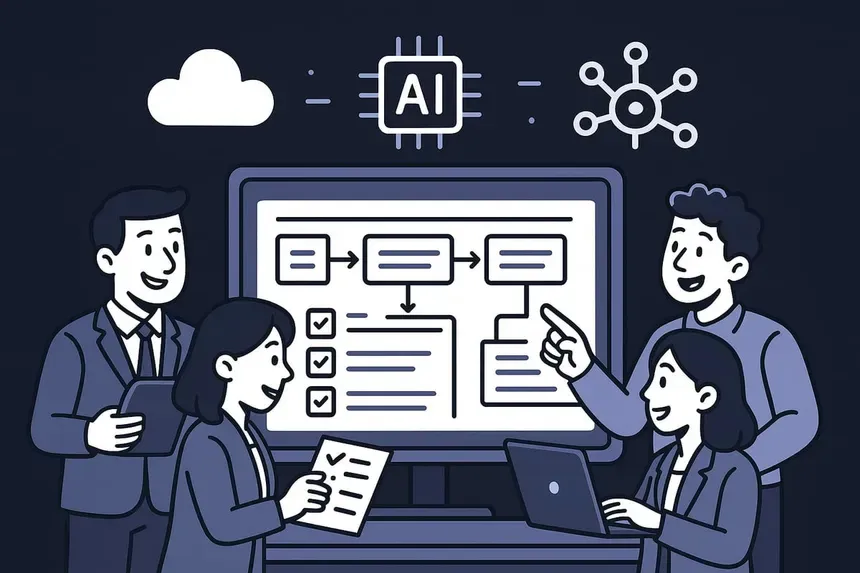
The concept of digital transformation has clearly moved away from being a fashionable buzzword and has now become an essential survival strategy for businesses in the face of the highly dynamic and volatile global market. It is a significant change where businesses are no longer just focused on digitizing their existing paper-based processes but are now focused on redefining their entire value chain through the perspective of modern technology. By embracing the core pillars of modern technology such as cloud infrastructure, decision intelligence through the power of AI, and real-time data analytics, businesses are now in a position not only to deliver the hyper-personalized experience that modern consumers demand but also develop the flexibility in their operations that would allow them to instantly change course in response to the changing demands of the economy or the threat of new competitors.
What is Digital Transformation?
Digital transformation has moved from a series of isolated IT improvements to a fundamental redefinition of the entire corporate value chain. By combining cloud-native infrastructure, AI-driven decision intelligence, and real-time data analytics, organizations are replacing disjointed legacy systems with cohesive, agile ecosystems that can change direction in an instant in response to market conditions. This is not simply a matter of buying new technologies, but of redefining the very DNA of a business, using automation to break down silos, harnessing deep data to anticipate customers’ needs before they even know they have them, and moving from periodic, reactive reporting to a constant stream of "decision intelligence." This is, in fact, a transformation that allows businesses to transcend traditional limits, providing hyper-personalized value on a scale and velocity that was previously unimaginable.
Why Digital Transformation Matters
The risk of digital stagnation is no longer just a threat to losing market share; rather, it represents a threat to the very existence of the organization as traditional industries are rapidly being disrupted by "digital native" competitors. Digital transformation represents the structural flexibility required to meet the needs of modern consumers, providing instantaneous hyper-personalized service while simultaneously ridding the business of the "noise" associated with manual, siloed operations. This transformation to a cloud-integrated, AI-augmented environment represents the agility required to pivot business strategy in real-time, moving away from a reactive, gut-feel approach to management toward a culture of "decision intelligence" where every move can be made with live data. Ultimately, the digital transformation ensures that the organization remains relevant and has the required scalability to deliver its value proposition without being throttled by the constraints of its infrastructure.
Key Technologies Driving Digital Transformation
Cloud Computing
cloud computing has transitioned from a simple data storage solution to a "foundational engine" for digital transformation, enabling organizations to operate in a manner that is "elastic and rapid in a manner that was previously unimaginable." By harnessing the immense, distributed infrastructure of cloud service providers such as Amazon Web Services, Microsoft Azure, and Google Cloud, organizations are now able to launch global, AI-infused applications in a matter of minutes, effectively transforming previously expensive capital expenditures into cost-effective, consumption-based operating expenditures. This is no longer simply a matter of replacing expensive in-house server rooms but, more importantly, provides instant access to latest-generation technologies such as specialized AI accelerators, serverless computing, and real-time big data analytics, all of which enable small and medium-sized enterprises to compete on a global scale in a manner that is technically equivalent to a multi-billion-dollar organization.
Artificial Intelligence (AI)
In fact, "the integration of Artificial Intelligence has moved beyond task automation into a new world of 'Agentic Orchestration.' This is where, instead of simply executing rules, AI agents behave like 'thinking' collaborators that can orchestrate entire end-to-end, multi-step processes, such as supply chain reconciliation or complex customer onboarding, without human intervention." By moving from a reactive reporting paradigm to a Decision Intelligence paradigm, organizations are no longer simply able to look back in history to understand what has happened; they are able to look forward in real-time, leveraging AI dashboards to predict market shifts and execute the "next best action."
Data Analytics
Data analytics has progressed from static reporting to Decision Intelligence, where tools like Power BI serve as a "strategic radar" in real-time. Through the integration of Generative AI and Copilot, these tools enable non-technical users to query vast datasets using natural language, converting raw data into interactive narratives in just seconds. Contemporary businesses are moving from "descriptive" analytics—what happened—to "prescriptive" analytics—what we should do—by using automated machine learning to predict market trends and determine the best course of action for businesses before they happen. This democratization of data enables all departments, from marketing to operations, to pivot with speed and agility through a "single source of truth" to ensure efficiency in a hyper-dynamic market.
Key Areas of Digital Transformation
Customer Experience
- Businesses are using digital tools to deliver personalized and seamless customer experiences across multiple channels.
Business Processes
- Automation and digital workflows improve efficiency and reduce operational costs.
Business Models
- Companies are adopting new digital business models, such as subscription services and online platforms, to generate revenue.
Workforce Transformation
- Employees are using digital tools to collaborate, work remotely, and improve productivity.
Benefits of Digital Transformation
The value of digital transformation has shifted from being merely "experimental" to being "essential," with top organizations realizing an increase of up to 30 percent in operational efficiencies and 40 percent in profitability using AI-native architectures. This is because traditional rigid systems are being replaced with agile cloud architectures and Agentic AI, which are essentially digital workers that can think and act independently on multiple steps. This is not only resulting in cost savings; it is also creating a new paradigm of "Data Liquidity," where real-time information is flowing in from every department of the organization and feeding into a single source of truth. This single source of truth is allowing organizations to pivot their strategies using predictive "Decision Intelligence" rather than relying on gut feelings. This is because this combined technology stack is allowing organizations to scale their impact and revenue without having to worry about proportional increases in human resources and physical infrastructure.
Challenges in Digital Transformation
Overcoming the structural challenges associated with digital transformation, such as organizational resistance, high upfront costs, and the "skills gap," means changing one's perspective from seeing technology as a "plugin" to one where it is viewed as a core cultural evolution. The global IT talent gap is projected to affect 90% of organizations this year, but companies are able to overcome these challenges by embracing a new "Value-First" model for phased execution, where they focus on high-impact pilot projects instead of attempting to achieve "big bang" implementations. By utilizing modern middleware and API technologies to bridge the gap between fragmented legacy systems, and by embracing "Privacy by Design" to meet increasingly stringent data sovereignty mandates, companies can not only mitigate technological risks but also drive a new cultural model of "AI-human collaboration." The key to success is not only defined by transparent leadership but also by driving a new cultural model where organizational members can be empowered to become "strategic architects" for an agile future.
Role of IT Consulting in Digital Transformation
What was once simply the business of "installing software" has evolved into the much more sophisticated realm of Strategic Digital Orchestration, where the firm serves as the bridge between the complexities of emerging technology and desired business outcomes. As the world has quickly learned to adapt to the advent of Agentic AI and decentralized cloud infrastructure, the IT consulting world has moved beyond the days of simply "installing software" and instead has begun to orchestrate the development of "decision intelligence" ecosystems that allow businesses to pivot in real-time. Through the process of conducting a "deep dive audit" of existing "technical debt," the IT consulting world has removed the risks of costly failed technology deployments, ensuring that every technology shift, from the adoption of the new Microsoft Fabric for data analytics to the utilization of the latest in LLMs, is in alignment with the needs of the business for scale and security.
Conclusion
The shift from "experimenting with digital tools" to "executing a unified digital strategy" has now become the major force behind market leadership. This is because the overall world spend on digital transformation is set to reach $3.4 trillion this year, indicating a major shift in the way businesses are run today. In today's world, "technology is no longer just another IT budget line item but the very engine of business growth." Organizations that have already managed to modernize their legacy systems are now running 80% faster than their competitors in the way they implement new features and are moving beyond basic automation into "Agentic AI," where the systems are no longer programmed but can reason and execute complex multi-step processes. This is allowing businesses to experience 50% faster cycle times and a 40% improvement in profitability, indicating that the "digital divide" is now a permanent divide between the agile leaders of the future and the stagnant legacy businesses of the past.