
FinOps in 2026: How Businesses Are Optimizing Cloud Costs and Maximizing ROI
Introduction
As businesses rapidly adopt cloud computing, managing cloud expenses has become a major challenge. While cloud platforms offer flexibility, scalability, and speed, they can also lead to unexpected and rising costs if not managed properly.
This is where FinOps (Financial Operations) comes into play. FinOps is a modern approach that helps organizations monitor, control, and optimize cloud spending while maximizing business value.
With leading cloud platforms like Amazon Web Services, Microsoft Azure, and Google Cloud being widely used, businesses are now focusing on financial accountability in the cloud. FinOps enables companies to align technology, finance, and business teams to make smarter spending decisions.
What is FinOps?
FinOps, short for Financial Operations, is a cloud financial management practice that helps organizations gain visibility into their cloud costs and optimize spending.
It brings together teams from finance, IT, and operations to collaborate and ensure that every dollar spent on cloud services delivers maximum value.
The goal of FinOps is simple:
Spend smarter, not more.
Why FinOps is Important
Cloud computing operates on a pay-as-you-go model, which means businesses are billed based on usage. While this provides flexibility, it can also lead to overspending if resources are not properly managed.
Common issues businesses face include:
- Paying for unused or idle resources
- Lack of visibility into cloud expenses
- Unexpected billing spikes
- Inefficient resource allocation
FinOps helps solve these problems by providing better control, transparency, and accountability.
Key Principles of FinOps
1. Visibility and Transparency
Organizations must have clear visibility into their cloud usage and costs. This includes tracking spending across teams, departments, and projects.
2. Accountability
Each team is responsible for managing its own cloud usage and budget. This encourages efficient use of resources.
3. Continuous Optimization
Cloud cost optimization is not a one-time activity. Businesses must continuously monitor and adjust their usage to improve efficiency.
4. Collaboration
FinOps encourages collaboration between finance, engineering, and business teams to align goals and improve decision-making.
Key FinOps Practices
Cost Monitoring and Reporting
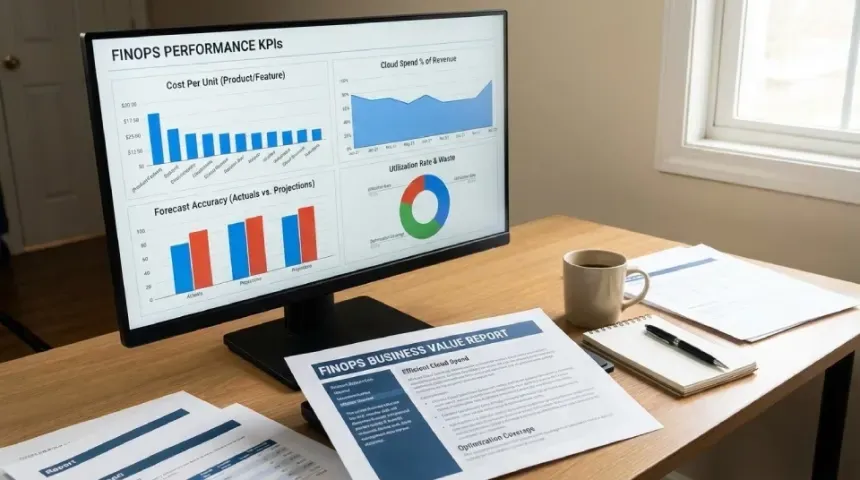
Businesses use dashboards and tools to track cloud usage and spending in real time. This helps identify areas where costs can be reduced.
Resource Optimization
Unused or underutilized resources are identified and removed. This includes shutting down idle servers and resizing over-provisioned resources.
Reserved Instances and Savings Plans
Cloud providers offer discounts for long-term commitments. Businesses can reduce costs by choosing reserved instances or savings plans.
Auto-Scaling
Auto-scaling ensures that resources are used only when needed. This reduces unnecessary spending during low-demand periods.
Budgeting and Forecasting
Organizations set budgets and use forecasting tools to predict future cloud expenses. This helps avoid unexpected costs.
Benefits of FinOps
Adopting FinOps provides several advantages:
Cost Reduction: Eliminates unnecessary cloud expenses
Better Resource Utilization: Ensures efficient use of cloud services
Improved Financial Control: Provides visibility into spending
Faster Decision-Making: Enables data-driven financial decisions
Higher ROI: Maximizes value from cloud investments
Challenges in Implementing FinOps
Despite its benefits, businesses may face challenges such as:
- Lack of cost visibility across teams
- Complex multi-cloud environments
- Limited expertise in cloud financial management
- Resistance to change in organizational culture
These challenges can be addressed with the right tools and consulting support.
Role of IT Consulting in FinOps
IT consulting firms play a key role in helping businesses implement FinOps practices. They assist in setting up cost monitoring tools, optimizing cloud usage, and developing financial strategies.
Consultants also help organizations build a FinOps culture, ensuring that all teams understand and follow cost optimization practices.
The Future of FinOps
As cloud adoption continues to grow, FinOps will become a standard practice for organizations worldwide. Businesses will increasingly rely on automation and AI to optimize cloud spending and improve efficiency.
Companies that adopt FinOps early will gain a competitive advantage by reducing costs and improving financial performance.
Conclusion
FinOps is transforming how businesses manage cloud expenses. By combining financial discipline with cloud technology, organizations can control costs, improve efficiency, and maximize return on investment.
In 2026 and beyond, FinOps will be essential for any business that relies on cloud computing. Companies that embrace this approach will be better positioned to scale efficiently and achieve long-term success.